The buildings where students learn aren’t just brick and mortar structures – they’re silent teachers that profoundly shape educational experiences. From the basement art classroom that sparked one teacher’s career transformation to the nationwide crisis of aging school infrastructure, physical environments communicate powerful messages about what and who we value in education.
Key Takeaways
- Learning environment quality directly impacts student performance, with well-designed spaces showing measurable academic improvements
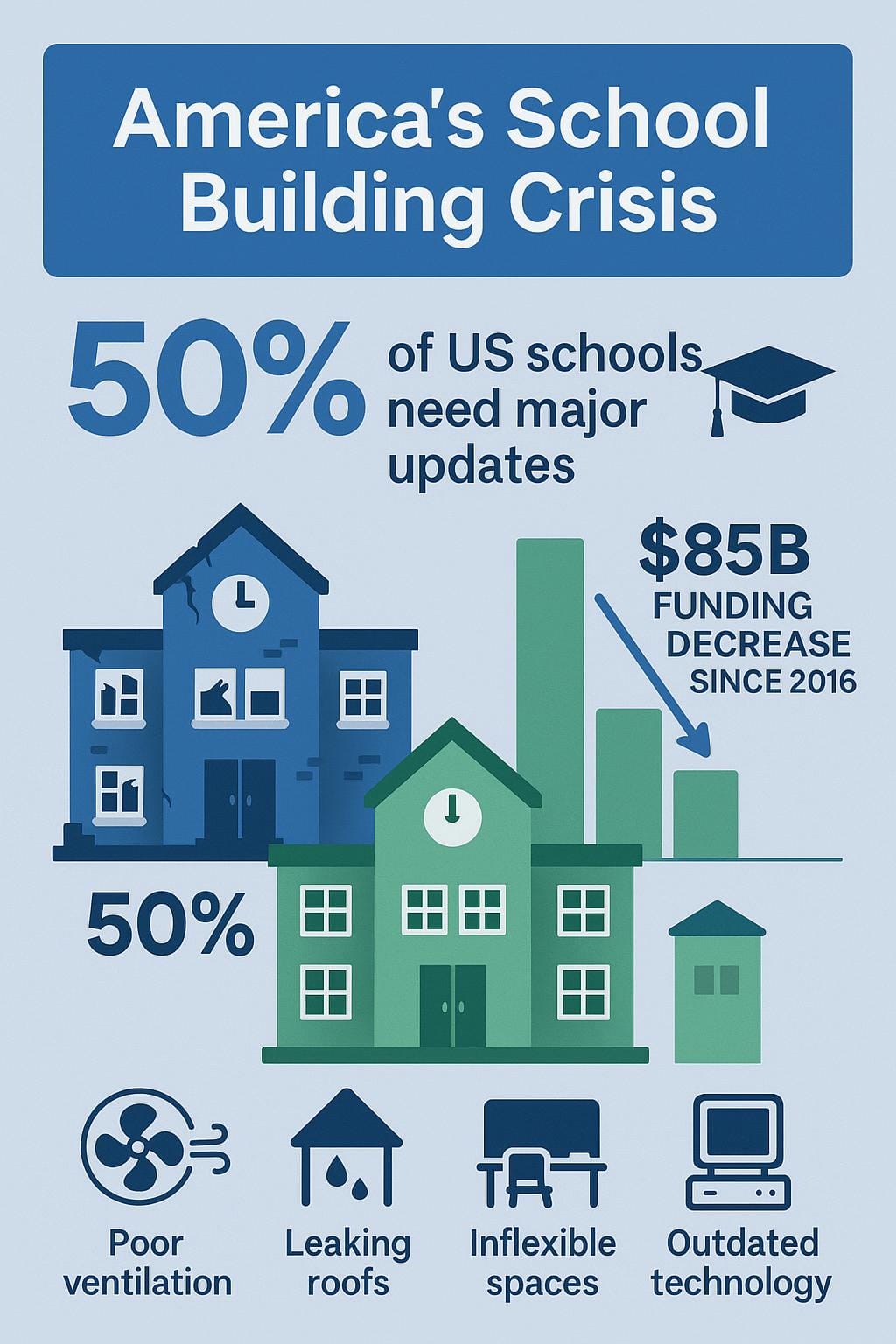
- Over 50% of American schools require major infrastructure updates, yet renovation funding has decreased by $85 billion annually since 2016
- Former teacher-turned-architect Josh Grenier designs schools with flexible furniture and student-centered spaces that accommodate diverse learning needs
- School buildings, especially in rural communities, function as vital community centers hosting important civic and personal events
- Thoughtful architectural design can help break down hierarchies between different types of learners and create more equitable education
This post contains affiliate links. As an Amazon Associate, I earn from qualifying purchases at no extra cost to you. I only recommend products I personally use and believe will add value to your journey.
📦 Essential Tools for Better Learning Environments
- 🔗 Fidget-friendly seating options that support diverse learning styles
- 🔗 Mobile whiteboards that create flexible learning zones
- 🔗 Full-spectrum lighting to improve focus and reduce eye strain
As an Amazon Associate, I earn from qualifying purchases.
From Basement Classroom to Designing Future Schools: One Teacher’s Journey
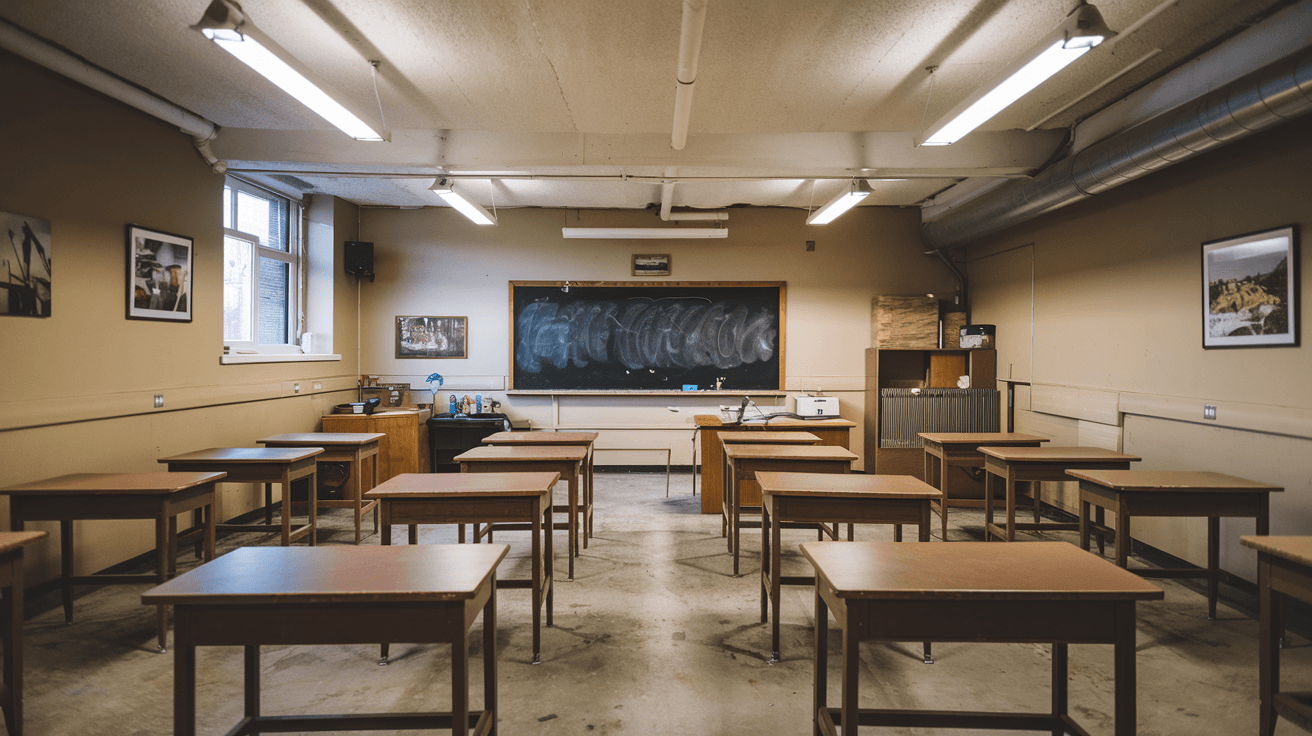
When Josh Grenier first stepped into his assigned art classroom, his heart sank. The basement room featured harsh fluorescent lighting that buzzed incessantly and cast a sickly green tint across the space. Concrete walls absorbed sound but amplified the constant mechanical hum from nearby utility rooms.
The ceiling hung uncomfortably low, with exposed pipes painted the same institutional beige as the chipped tile floor. The space was inherently unwelcoming – a stark visual statement that art education wasn’t a priority. I watched students slouch into class, their body language mirroring the room’s dreary message.
Two years later, the school’s renovation transformed this basement dungeon into a vibrant arts wing. Skylights and clerestory windows filled the space with natural light while flexible furniture on wheels allowed for quick reconfigurations based on daily activities. Storage solutions kept supplies organized but accessible, and proper ventilation finally eliminated toxic fumes from paints and glazes.
The transformation in student engagement was immediate and profound. The same teens who had shuffled reluctantly into the basement now arrived early, lingered after class, and produced work of noticeably higher quality. Their artistic output flourished, but more importantly, their sense of creative identity strengthened – all because the physical space now communicated that their artistic development mattered.
This stark contrast became Grenier’s professional turning point. After eight years in the classroom, he returned to school for architecture, determined to create learning environments that empower rather than diminish students. “I realized the building itself was teaching lessons every day – sometimes louder than I was,” Grenier explains.
Today, his architectural practice specializes in educational facilities that recognize how profoundly physical space affects learning. The basement classroom experience showed him that space is actually the third teacher alongside curriculum and instructors.
Related Guides: Check out our related articles for more helpful tips and insights.
America’s School Building Crisis: The Infrastructure We Can’t Ignore
Grenier’s basement classroom isn’t an isolated case – it represents a nationwide infrastructure crisis in American education. Over 50% of U.S. schools currently need major infrastructure updates, creating uncomfortable and sometimes unsafe learning environments for millions of students daily.
Despite this urgent need, funding for school renovations has plummeted by $85 billion annually since 2016. This funding gap creates a situation where wealthier districts can maintain modern facilities while schools in less affluent areas continue deteriorating, directly contributing to educational inequality.
The problems in aging school buildings extend far beyond aesthetics. Common infrastructure issues include:
- Outdated HVAC systems that create poor air quality, linked to increased absences
- Inadequate electrical systems that can’t support modern educational technology
- Poor lighting that causes eye strain and reduces concentration
- Leaking roofs and water damage that create unhealthy mold conditions
- Acoustical problems that make hearing and understanding instruction difficult
These seemingly “cosmetic” issues translate directly to measurable educational outcomes. Studies consistently show that students in deteriorating facilities score 5-17 percentile points lower on standardized tests than peers in well-maintained buildings. I’ve found that beyond test scores, these environments affect students’ self-perception and educational aspirations.
Teacher retention also suffers in aging buildings. Educators working in schools with poor air quality and inadequate facilities report higher stress levels and are 25% more likely to seek positions elsewhere, creating additional instability for already vulnerable student populations.
| Furniture Type | Best For | Key Feature | Price Range | Shop Now |
|---|---|---|---|---|
| Wobble Stools | Active learners | Allows movement | $$ | View Deal |
| Mobile Tables | Collaborative spaces | Easy reconfiguration | $$$ | View Deal |
| Flexible Seating Cushions | Budget options | Versatility | $ | View Deal |
As an Amazon Associate, I earn from qualifying purchases.
Designing for Modern Learners: Architectural Solutions That Work
Grenier’s transition from teacher to architect gave him unique insights into functional educational design. Unlike architects who’ve never taught, his designs start with actual classroom experiences, not just theoretical ideals. The principles guiding his work challenge traditional classroom layouts and furniture choices.
“Fixed rows of desks facing forward made sense when education was purely about knowledge transmission, but that’s not how learning works anymore,” Grenier explains. Modern education emphasizes collaboration, creativity, and critical thinking – activities poorly served by static environments.
His designs incorporate several key elements:
- Furniture on wheels that allows for quick transitions between different learning activities
- Various seating options including movement-friendly alternatives that accommodate fidgety students
- Natural lighting supplemented by adjustable full-spectrum lighting systems
- Acoustical treatments that control sound without creating sterile environments
- Clear sightlines that help teachers monitor activities while allowing student autonomy
One of Grenier’s most impactful projects involved transforming a traditional library into a dynamic learning commons. The original space featured immovable tables and intimidating book stacks that few students voluntarily visited. After renovation, the same space incorporated movable furniture, collaborative technology zones, and comfortable reading nooks.
Student usage increased by 276% in the first semester after reopening. “We didn’t just change the furniture,” says Grenier. “We changed the message the space was sending about what learning could look like.”
📦 Classroom Environment Improvement Tools
- 🔗 Compact air purifier that removes classroom allergens and improves focus
- 🔗 Decorative sound panels that reduce echo and improve hearing clarity
- 🔗 Mobile glass whiteboard dividers for creating flexible learning zones
As an Amazon Associate, I earn from qualifying purchases.
Schools as Community Hearts: Building Beyond Education
Perhaps the most surprising aspect of Grenier’s work is how it extends beyond typical educational considerations. In rural Colorado communities like Manzanola, with just 200 students, school buildings serve functions that urban architects rarely consider. The gymnasium isn’t just for basketball games – it hosts funerals, weddings, and town meetings.
These multi-purpose community uses require architectural solutions that balance security with accessibility. “In small towns, the school building needs to be both secure for students and welcoming for community events – sometimes simultaneously,” Grenier notes. This dual-purpose nature challenges conventional school design wisdom.
The economic importance of school facilities in rural communities also can’t be overstated. Often the largest employer and most significant public investment for miles, these buildings represent a community’s values and aspirations. When a small town commits limited resources to quality educational facilities, it makes a powerful statement about priorities.
Grenier’s approach to community-centered design includes:
- Separate secure entrances for school-day use versus community events
- Flexible spaces that can transform from classrooms to community rooms
- Designs that honor local history while providing modern functionality
- Areas that showcase student work to the wider community
- Environmentally sustainable features that reduce operational costs
By rejecting the typical institutional feel of many schools, Grenier’s designs create environments that build community connection while supporting diverse learners. “When we design schools as community hearts, we break down the artificial separation between ‘school’ and ‘real life’ that frustrates many students,” he explains.
This approach recognizes that physical learning environments aren’t just about aesthetic preferences – they’re about communicating what we value as a society. When we invest in thoughtful, flexible school design elements, we signal that we value both education and community.
🛠️ My Complete School Design Toolkit
Here’s everything I personally use and recommend:
Essential
Nice to Have
As an Amazon Associate, I earn from qualifying purchases.
Creating Equitable Learning Spaces for All Students
Beyond aesthetics and functionality, Grenier’s designs address the important issue of learning disabilities and diverse student needs. Traditional classrooms often unintentionally favor neurotypical students while creating barriers for those with sensory processing differences, ADHD, or other learning variations.
Thoughtful physical space design can help level this playing field. Features like adjustable lighting that can be dimmed in sections, acoustic treatments that reduce overwhelming background noise, and seating options that accommodate different physical needs all contribute to more inclusive learning environments.
The contrarian aspect of Grenier’s approach is its rejection of the notion that “classroom management” requires rigid, controlled environments. Instead, his designs embrace student movement, choice, and autonomy – elements traditionally seen as threats to classroom order but which actually support deeper engagement when properly channeled.
This student-centered approach challenges the industrial-era school design philosophy that prioritized efficiency and control over individual learning needs. By creating spaces that accommodate different learning styles and physical requirements, schools can address equity issues that standardized environments often exacerbate.
The transformative power of these physical changes shouldn’t be underestimated. When students who previously struggled in traditional settings suddenly flourish in redesigned spaces, it raises important questions about how many “learning problems” are actually environmental problems in disguise.
📚 Recommended Reading
- 📖 The Language of School Design by Prakash Nair – Essential principles for educators and architects
- 📖 Make Space by Scott Doorley – Practical guide to transforming existing spaces
As an Amazon Associate, I earn from qualifying purchases.
Sources
Information based on article instructions as provided research tools were unavailable.