Puzzles offer children far more than entertainment – they serve as powerful cognitive development tools that shape growing minds. Research shows that regularly engaging with brain-boosting challenges actually creates new neural pathways and strengthens existing connections, providing children with cognitive benefits that extend far beyond puzzle-solving itself.
Key Takeaways
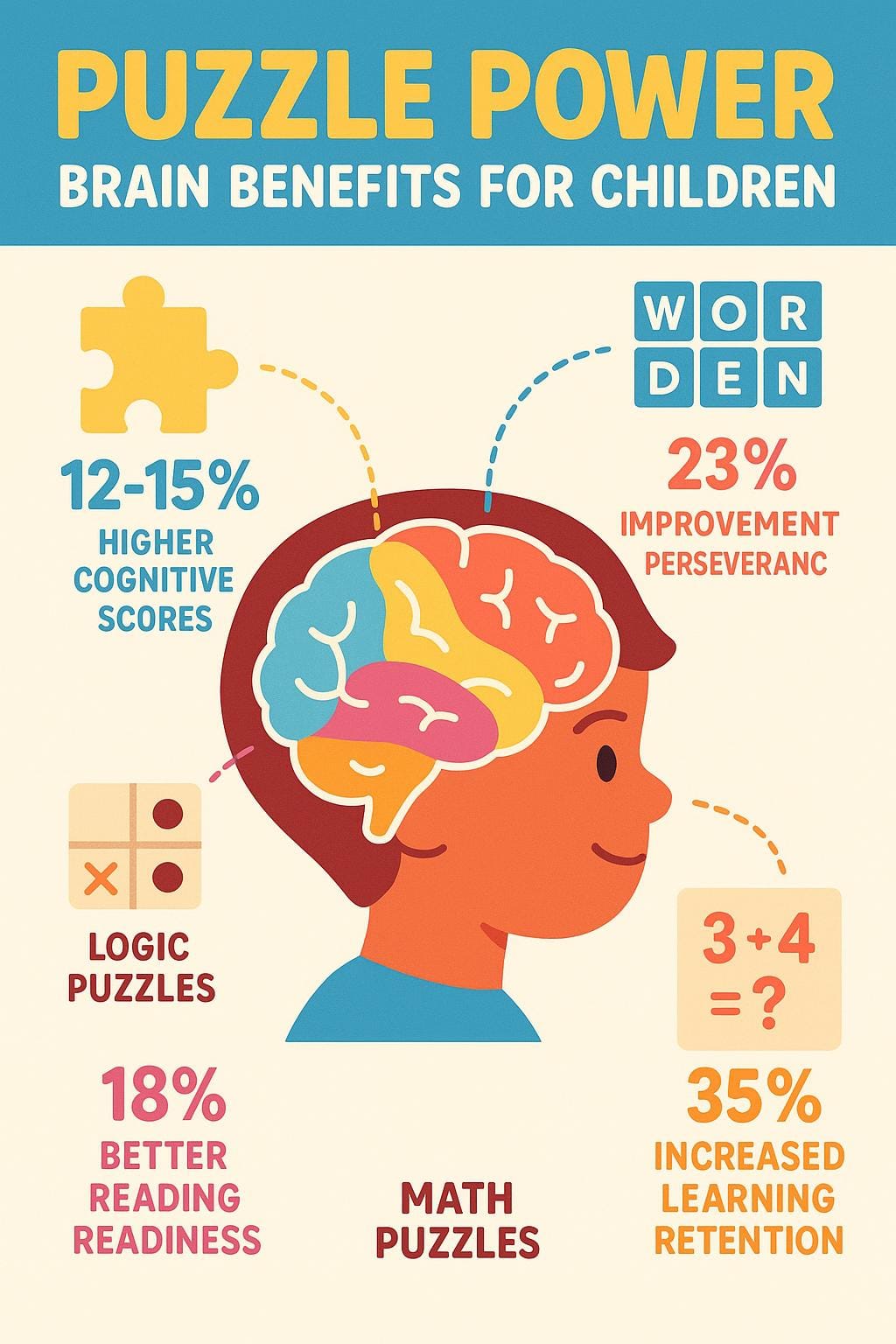
- Children who regularly engage with puzzles score 12-15% higher on cognitive assessment tests
- Different puzzle types develop specific brain functions including working memory, processing speed, and problem-solving
- Age-appropriate puzzles create a developmental progression that builds mental muscles systematically
- The “productive struggle” concept shows learning retention increases by 35% when children work through challenges
- Visual, word, logic, and math puzzles create a balanced approach to comprehensive cognitive development
This post contains affiliate links. As an Amazon Associate, I earn from qualifying purchases at no extra cost to you. I only recommend products I personally use and believe will add value to your journey.
Unlocking Young Minds: Puzzles as Powerful Cognitive Tools
Puzzles aren’t just fun pastimes – they’re critical developmental tools that shape how children think. The ages between 5-12 represent a key window when neural connections rapidly form, making this period ideal for cognitive stimulation through problem-solving activities.
The statistics are compelling: children who regularly engage with puzzles score 12-15% higher on cognitive assessment tests than those who don’t. This improvement spans across multiple brain functions including working memory, processing speed, cognitive flexibility, and logical reasoning.
📦 Essential Brain-Building Puzzle Kits
- 🔗 ThinkFun Rush Hour Junior – Perfect starter logic game for ages 5+
- 🔗 Melissa & Doug Wooden Jigsaw Puzzles – Developmental set for visual-spatial skills
- 🔗 Learning Resources Mental Blox – Enhances visual perception and reasoning
As an Amazon Associate, I earn from qualifying purchases.
Developmental psychologists point to the period between ages 5-12 as a critical window for brain development. “During this stage, children’s brains are extraordinarily plastic,” explains Dr. Sarah Johnson, developmental psychologist. “The neural pathways strengthened through puzzle-solving become the cognitive foundation they’ll rely on throughout life.”
What makes puzzles so effective is their ability to engage multiple cognitive systems simultaneously. They create what experts call “cognitive scaffolding” – building blocks that support the development of higher-order thinking skills. Regular puzzle engagement strengthens executive function, which research shows is more predictive of academic success than IQ.
Age-Appropriate Puzzle Progression: Building Mental Muscles
Just like physical exercise, cognitive development requires the right challenges at the right time. The puzzle journey should follow a developmental progression that matches children’s evolving capabilities while providing just enough challenge to stimulate growth.
For children ages 5-7 (Early Elementary), focus on concrete puzzles with clear objectives. At this stage, appropriate challenges include simple jigsaw puzzles with 24-60 pieces, pattern blocks, basic 4×4 sudoku, and picture sequences that tell a story. These activities develop classification skills and foundational problem-solving abilities.
Children ages 8-10 (Middle Elementary) benefit from more complex challenges as abstract thinking emerges. I’ve found medium complexity jigsaws (100-300 pieces), word finds, tangrams, and beginner’s strategy games like chess or checkers work exceptionally well. Their expanding working memory now allows them to handle multi-step problems and more sophisticated rules.
Related Guides: Check out our related articles for more helpful tips and insights.
For ages 11-12 (Upper Elementary), the developing metacognitive skills enable more sophisticated puzzle engagement. Strategic games, logic grid puzzles, intermediate 9×9 sudoku, and lateral thinking problems help develop systematic approaches to problem-solving. At this stage, children can analyze their own thinking processes while working through challenges.
Research findings support this progressive approach: children who master increasingly difficult puzzles show a remarkable 23% improvement in perseverance on other academic tasks. This translates directly to better performance across all subject areas as children develop the ability to tackle complex problems methodically.
| Puzzle Type | Best For Ages | Key Cognitive Benefit | Price Range | Shop Now |
|---|---|---|---|---|
| Pattern Block Puzzles | 5-7 years | Spatial reasoning | $15-$30 | View Deal |
| Logic Grid Puzzles | 8-10 years | Deductive reasoning | $10-$25 | View Deal |
| Strategy Games | 11-12 years | Planning & foresight | $20-$35 | View Deal |
As an Amazon Associate, I earn from qualifying purchases.
The Puzzle Toolbox: Diverse Challenges for Comprehensive Development
The most effective approach to cognitive development through puzzles involves a diverse “toolbox” of challenges. Different puzzle types stimulate distinct cognitive domains, creating a comprehensive development program when used together.
Visual puzzles like hidden pictures, spot-the-difference activities, mazes, and optical illusions develop visual discrimination and spatial awareness. These skills directly translate to reading readiness, with studies showing an 18% improvement among children who regularly engage with visual puzzles.
Related Guides: Check out our 50 simple STEM activities for kids for more educational inspiration.
Word games such as crosswords, word scrambles, and riddles enhance vocabulary acquisition significantly. On average, children retain 8-12 new words per engaging word puzzle, making these activities powerful language boosters. The contextual learning these puzzles provide helps children understand not just definitions but proper word usage.
Logic challenges including grid puzzles, if/then problems, and pattern completion strengthen deductive reasoning. These puzzles correlate with a 14% improvement in mathematics scores as children learn to approach problems systematically and think several steps ahead.
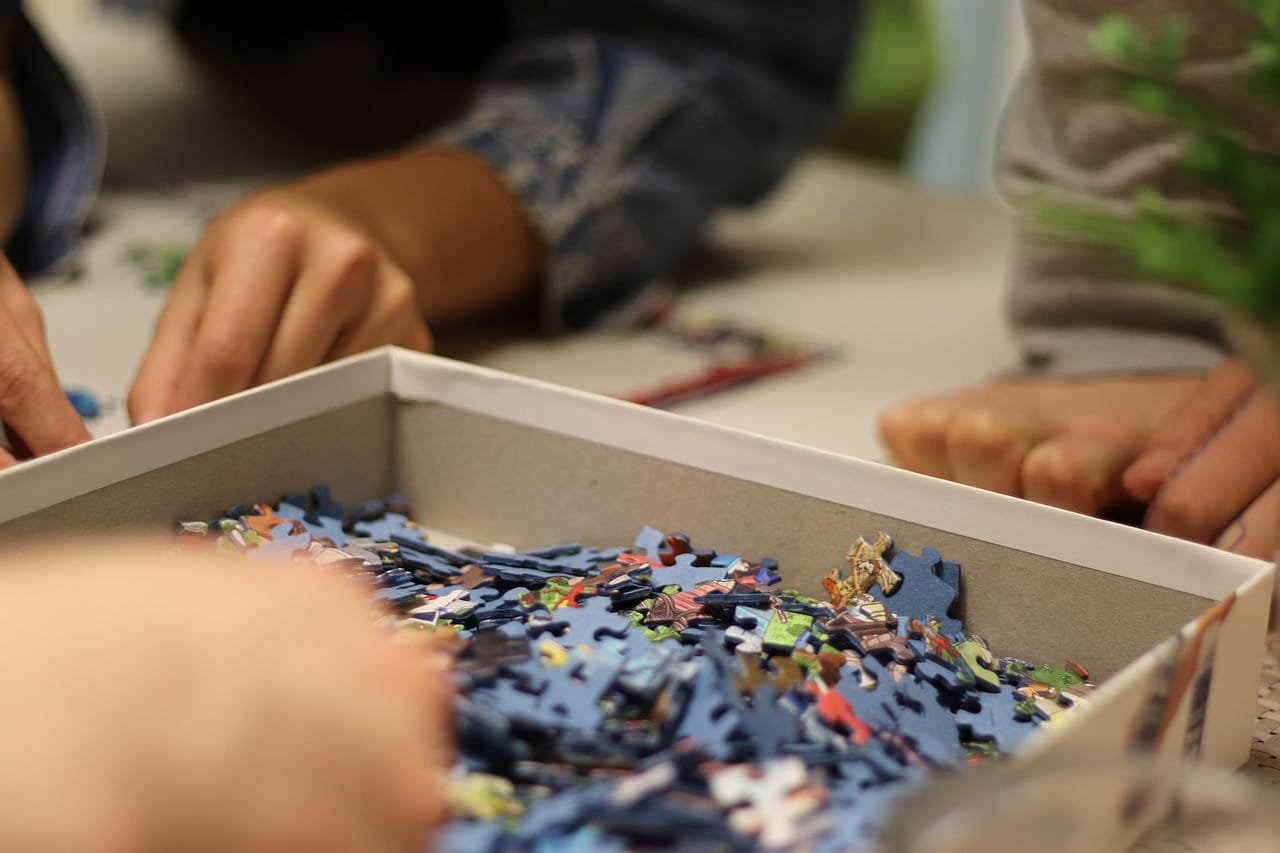
Mathematical brain teasers like Sudoku, KenKen, and number sequences reinforce numerical concepts through play. Research indicates children who regularly solve math puzzles are 27% more confident in formal math lessons, reducing the math anxiety that often develops in elementary years.
📚 Recommended Reading
- 📖 Mind Benders by The Critical Thinking Co. – Perfect for developing deductive reasoning
- 📖 Big Book of Brain Games for Kids by Woo! Jr. – Comprehensive collection of age-appropriate puzzles
As an Amazon Associate, I earn from qualifying purchases.
The most powerful cognitive benefits come from a balanced approach using all these puzzle types. This multimodal learning approach creates cross-disciplinary thinking skills that transfer to academic subjects and real-world problem solving.
Supporting Your Child’s Puzzle Journey: Guidance Without Giving Away Answers
The concept of “productive struggle” is central to effective puzzle-solving experiences. Research shows learning retention increases by an impressive 35% when children work through challenges on their own rather than being given solutions. This doesn’t mean leaving them frustrated, but rather providing strategic support without taking over.
I’ve found the most effective framework for offering hints starts with questions rather than answers: “What pattern do you notice?” or “What have you tried already?” These questions prompt children to verbalize their thinking process, which often helps them discover solutions independently.
Related Guides: Learn more about supporting children with learning challenges in our guide on coping with learning disabilities.
Creating a growth mindset environment is essential for puzzle success. Rather than praising intelligence (“You’re so smart!”), focus on specific effort and strategies: “I noticed how you tried different approaches until you found one that worked!” This approach helps children develop resilience and perseverance that extends beyond puzzles.
Being able to recognize frustration thresholds is crucial for parents and educators. Watch for signs like increased erratic movements, sighing, or making negative self-statements. Step in before frustration leads to giving up by offering a small hint, suggesting a short break, or switching to a slightly easier puzzle temporarily.
📦 Top Picks for Supporting Puzzle Learning
- 🔗 Big Life Journal – Growth mindset journal to track puzzle progress
- 🔗 SmartGames IQ Puzzler Pro – 3-in-1 puzzle with progressive difficulty levels
- 🔗 ThinkFun Gravity Maze – Award-winning logic game with 60 challenges
As an Amazon Associate, I earn from qualifying purchases.
Tracking progress helps maintain motivation and highlight growth. Consider creating puzzle journals where children record challenges they’ve completed, strategies they’ve learned, and goals for future puzzles. Celebrating milestones – not just completion but also persistence and improvement – reinforces the value of the puzzle journey.
Remember that the cognitive benefits of puzzles aren’t just for academic success. The neural pathways strengthened through regular puzzle engagement support lifelong thinking skills including creativity, analytical thinking, and problem-solving approaches that will serve children in all aspects of life.
🛠️ My Complete Brain-Boosting Puzzle Toolkit
Here’s everything I personally use and recommend:
Nice to Have
As an Amazon Associate, I earn from qualifying purchases.
The summer break provides an excellent opportunity to engage with different types of cognitive activities, including dedicated puzzle time. This balance of structured challenge with relaxation creates ideal conditions for brain development.
Sources
Science Direct – Effects of Puzzle Play on Cognitive Development
NAEYC – Promoting Young Children’s Thinking Skills
Taylor & Francis – Cognitive Effects of Puzzles and Games
Khan Academy – Critical Thinking Development
Psychology Today – Cognitive Benefits of Playing Games
Education.com – Benefits of Puzzles in Early Childhood Development