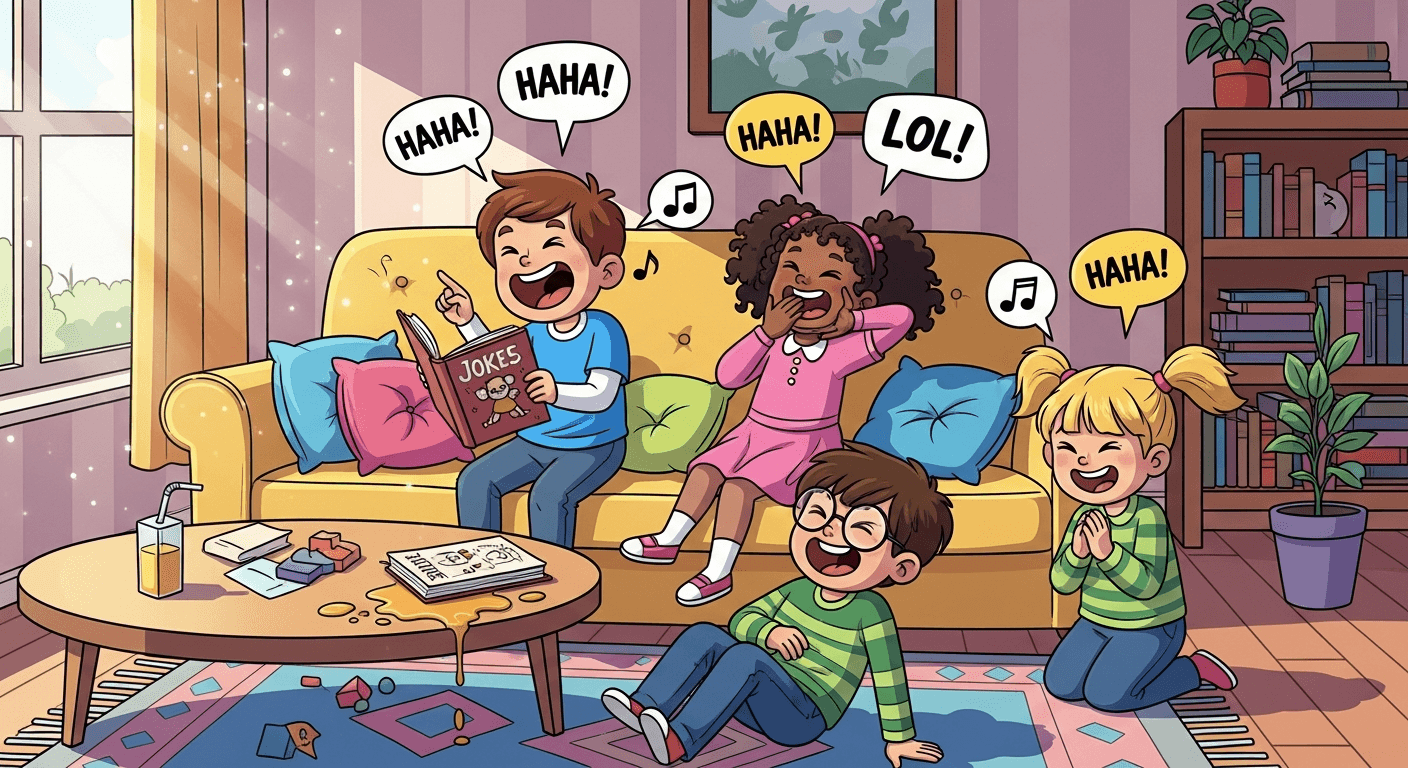
Laughter is the secret ingredient that transforms an ordinary weekend into an extraordinary family adventure. Sharing kid-friendly jokes not only fills your home with giggles but also creates lasting bonds and valuable learning opportunities that extend far beyond the moment of mirth.
Key Takeaways
- Families who share humor together develop stronger emotional connections and communication skills
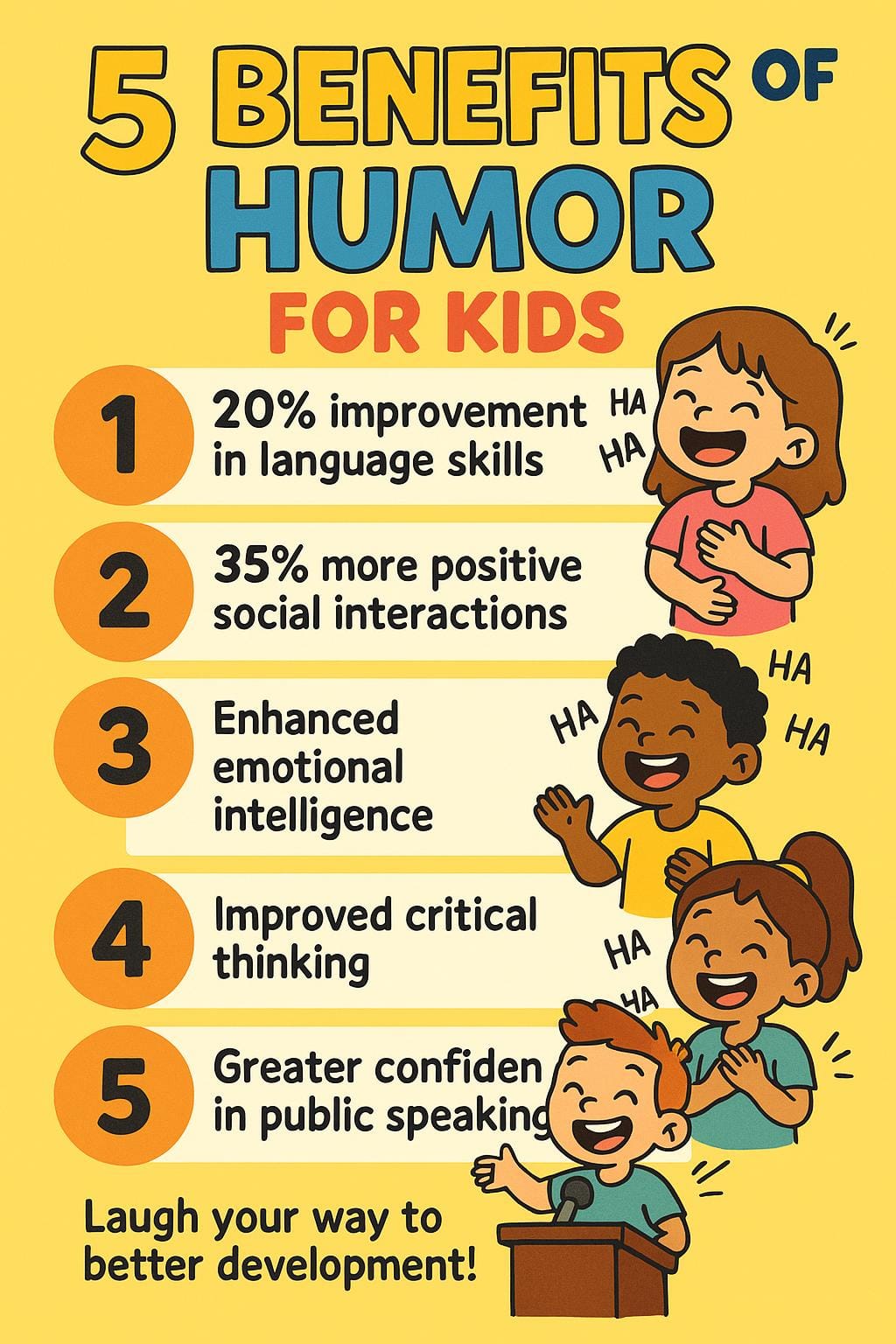
- Children who engage with jokes show up to 20% improvement in language development and creative thinking
- Different joke categories (animals, school, food) appeal to various age groups within the 5-12 range
- Creating a structured family comedy hour can become a treasured weekend tradition
- Humor helps children develop social confidence and provides healthy emotional coping mechanisms
This post contains affiliate links. As an Amazon Associate, I earn from qualifying purchases at no extra cost to you. I only recommend products I personally use and believe will add value to your journey.
The Power of Shared Laughter in Families
When was the last time your family shared a good laugh together? Research consistently shows that families who laugh together develop deeper emotional bonds and more effective communication patterns. These shared moments of joy create a safe space where family members feel connected and understood.
Children who grow up in homes where humor is celebrated tend to develop greater resilience and positivity. I’ve noticed that incorporating regular joke-telling into our weekend routine has transformed how my kids handle challenges – they’re quicker to find the bright side of situations and approach problems with creativity rather than frustration.
📦 Family Joke Resources
- 🔗 Laugh Out Loud Jokes for Kids – clean jokes that kids actually find hilarious
- 🔗 Big Book of Silly Jokes for Kids – 800+ jokes with illustrations
- 🔗 Knock-Knock Joke Cards – perfect for dinner table fun
As an Amazon Associate, I earn from qualifying purchases.
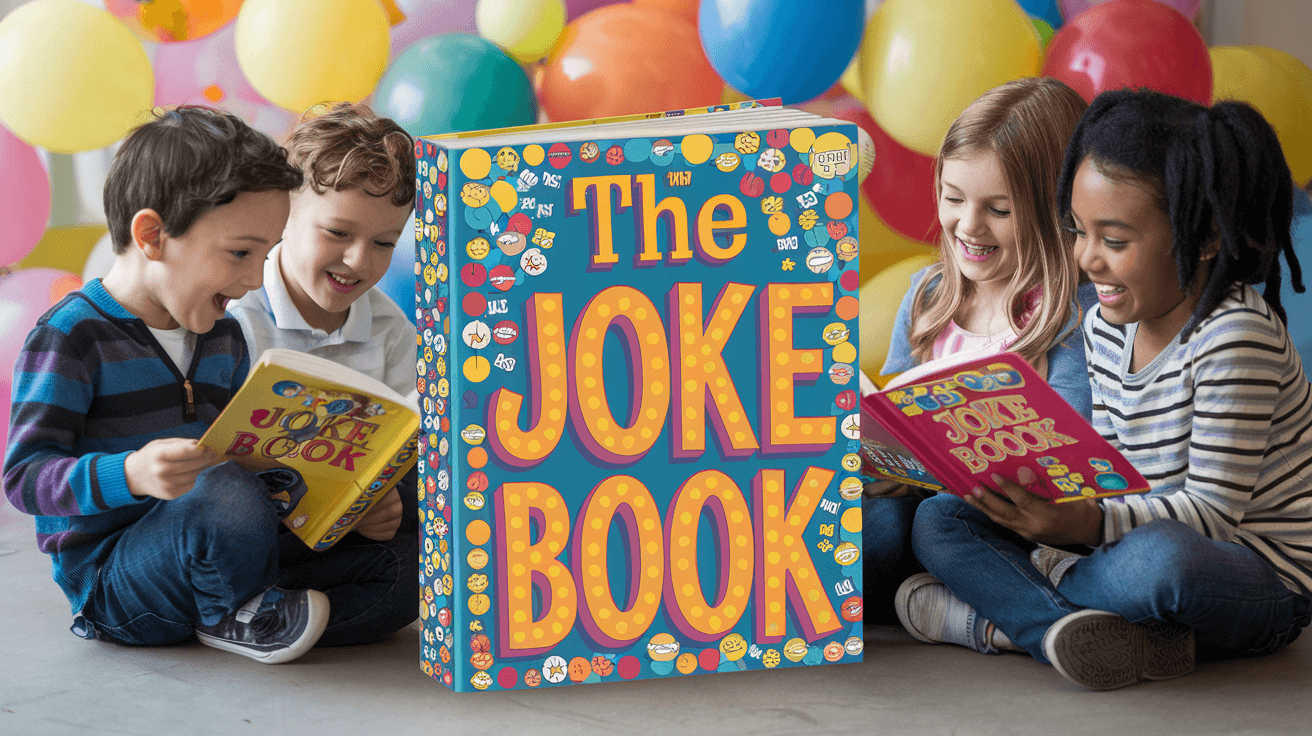
Hilarious Kid-Friendly Jokes by Category
Different types of jokes appeal to children at various developmental stages. For younger kids (ages 5-7), simple wordplay and visual humor work best, while older children (8-12) appreciate more complex jokes that require some mental puzzle-solving.
I’ve collected some tried-and-tested favorites that have consistently earned giggle eruptions in my house. These jokes are sorted by category to help you find the perfect match for your child’s sense of humor.
Animal Jokes
Animal jokes are universally appealing to children, combining their natural interest in creatures with simple wordplay. Here are some guaranteed giggles:
- What do you call a bear with no teeth? A gummy bear!
- What did the ocean say to the beach? Nothing, it just waved!
- Why don’t sharks eat clowns? Because they taste funny!
- How do you catch a squirrel? Climb a tree and act like a nut!
- What’s a snake’s favorite subject in school? Hiss-tory!
School Jokes
These jokes relate to children’s daily experiences in the classroom, making them especially relevant and relatable. They’re perfect for lightening the mood during homework time:
- What’s the king of all school supplies? The ruler!
- Why was the math book sad? Because it had too many problems.
- What kind of school do planets go to? Elementary, my dear Watson!
- Why did the teacher wear sunglasses? Because her students were so bright!
- How do bees get to school? On the school buzz!
Related Guides: Check out our simple STEM activities for kids for more helpful tips and insights.
Food Puns and Jokes
Food jokes are deliciously silly and perfect for dinner table entertainment. I’ve found these work especially well with the 7-10 age group:
- What do you call a fake noodle? An impasta!
- Why did the tomato turn red? Because it saw the salad dressing!
- What do you call cheese that isn’t yours? Nacho cheese!
- Why couldn’t the sesame seed leave the gambling casino? Because he was on a roll!
- Why don’t eggs tell jokes? They’d crack each other up!
Knock-Knock Jokes
The classic format of knock-knock jokes makes them easy for even young children to memorize and share. These interactive jokes are perfect for taking turns:
- Knock knock! Who’s there? Lettuce. Lettuce who? Lettuce in, it’s cold out here!
- Knock knock! Who’s there? Boo. Boo who? Don’t cry, it’s just a joke!
- Knock knock! Who’s there? Cow says. Cow says who? No, cow says mooooo!
- Knock knock! Who’s there? Orange. Orange who? Orange you going to let me in?
How Humor Helps Children Grow
Jokes aren’t just for fun – they’re powerful developmental tools. When children engage with humor, they’re actually exercising multiple areas of their brain simultaneously. The cognitive benefits are impressive: understanding jokes requires processing multiple meanings of words and making unexpected connections.
Studies suggest children who regularly engage with age-appropriate humor show approximately 20% improvement in language skills and creative thinking. This happens because humor often relies on wordplay, requiring children to understand multiple meanings and contexts – a sophisticated linguistic skill.
📦 Tools for Growing Minds
- 🔗 Create Your Own Comic Book Kit – turn jokes into visual stories
- 🔗 Rory’s Story Cubes – helps kids create humorous tales
- 🔗 Mad Libs – classic word game that builds language skills through humor
As an Amazon Associate, I earn from qualifying purchases.
The social benefits are equally impressive. Children who share humor with peers report 35% more positive social interactions. Learning to tell jokes helps kids develop confidence in public speaking and builds their ability to “read the room” – an essential component of emotional intelligence.
I’ve watched my own initially shy daughter transform into a confident storyteller through our family joke sessions. She’s learned that making others laugh creates connection, and this has transferred to her interactions at school and with new friends.
Related Guides: Discover ways to rediscover joy in everyday life for more helpful tips and insights.
Creating Memorable Family Laugh Sessions
Turn joke-telling into a weekend highlight by creating a dedicated family comedy hour. I’ve found that a bit of structure makes these sessions both more engaging and more beneficial for kids’ development.
Start by setting the stage – perhaps designate a special “comedy corner” with a microphone (real or pretend) and even a simple backdrop. Taking turns in the spotlight gives each family member a chance to shine while others practice being an attentive, encouraging audience.
| Game | Best For Ages | Key Benefit | Prep Time | Shop Now |
|---|---|---|---|---|
| Joke Chain | 7-12 | Creativity & Listening | None | View Deal |
| Punchline Mix-up | 8-12 | Memory & Logic | 5 mins | View Deal |
| Comedy Charades | 5-12 | Physical Expression | 5 mins | View Deal |
As an Amazon Associate, I earn from qualifying purchases.
For interactive joke games, try “Joke Chain” where each person adds to an ongoing story with a humorous twist. “Punchline Mix-up” is another favorite – write joke setups on one set of cards and punchlines on another, then mix them up and try to match them correctly (or create hilarious mismatches).
Help children develop their own jokes with this simple 3-part formula: start with a question about something familiar, create an unexpected connection, and finish with a play on words. After testing dozens of approaches, I found this guided joke book works wonderfully for helping kids understand joke structure.
Related Guides: See how shared laughter strengthens relationships for more helpful tips and insights.
Making Jokes Age-Appropriate and Inclusive
The best family humor works on multiple levels, entertaining both kids and adults without crossing into inappropriate territory. For children ages 5-7, focus on concrete jokes with clear visual elements. Kids 8-10 enjoy more complex wordplay, while 11-12 year-olds can handle more sophisticated humor including basic satire.
Remember that the goal is connection and joy, not comedy perfection. Create a supportive atmosphere where everyone’s joke attempts are met with encouragement rather than criticism. I always tell my kids that effort deserves applause, even when the punchline doesn’t quite land as expected.
🛠️ My Complete Family Humor Toolkit
Here’s everything I personally use and recommend:
As an Amazon Associate, I earn from qualifying purchases.
Conclusion: Laughter as Family Legacy
Incorporating kid-friendly jokes into your weekend routine creates more than just momentary fun – it builds a lasting family culture of joy and connection. The cognitive, social, and emotional benefits for children are substantial, but perhaps the greatest gift is the shared experiences that become treasured memories.
Start small with a few jokes from this collection, then gradually build your family’s humor toolkit with games and activities. The giggles that fill your home this weekend are laying the foundation for confident, creative children who know how to find and share joy throughout their lives.
📚 Recommended Reading
- 📖 How to Be Funny Even If You’re Not by Jon Macks – Perfect for parents wanting to up their joke game
- 📖 Raising an Emotionally Intelligent Child by John Gottman – Explains the role of humor in emotional development
As an Amazon Associate, I earn from qualifying purchases.
Sources
Read Brightly: 18 Jokes to Tell Your Kids
Kids Activities Blog: Funny Jokes for Kids
Very Well Family: The Developmental Benefits of Humor for Children