Sex education policy in schools has become a rapidly evolving and increasingly complicated landscape for educators to navigate. Recent policy changes at federal, state, and district levels have created a patchwork of requirements, restrictions, and expectations that directly impact what teachers can address in their classrooms.
Key Takeaways
- All educators are affected by sex education policy changes, not just health teachers
- State-level policies vary dramatically, creating significant geographic disparities in curriculum quality
- Teachers have developed innovative approaches to provide comprehensive information while staying within policy boundaries
- Research consistently shows comprehensive sex education leads to better health outcomes
- Knowing how to effectively communicate with administrators, parents and community members is essential
This post contains affiliate links. As an Amazon Associate, I earn from qualifying purchases at no extra cost to you. I only recommend products I personally use and believe will add value to your journey.
Why Sex Education Policy Matters for All Educators
The impact of sex education policy extends far beyond just health classrooms. Every educator needs to understand these shifts because questions about bodies, relationships, and identity naturally arise across all subjects and settings.
Recent surveys indicate that over 70% of schools have been affected by policy changes related to health education content in the past three years. These changes directly influence classroom discussions, curriculum planning, and how teachers respond to student questions.
📦 Essential Resources for Health Educators
- 🔗 Michelle Icard’s comprehensive guide for addressing tough topics
- 🔗 Research-backed strategies for effective health instruction
- 🔗 Policy navigation guide for classroom implementation
As an Amazon Associate, I earn from qualifying purchases.
The Policy Battleground: Understanding Today’s Climate
Federal funding for sex education programs has seen dramatic shifts in recent years. Programs like the Teen Pregnancy Prevention Program experienced funding threats of up to $100 million, while abstinence-only initiatives saw increased support despite research questioning their effectiveness.
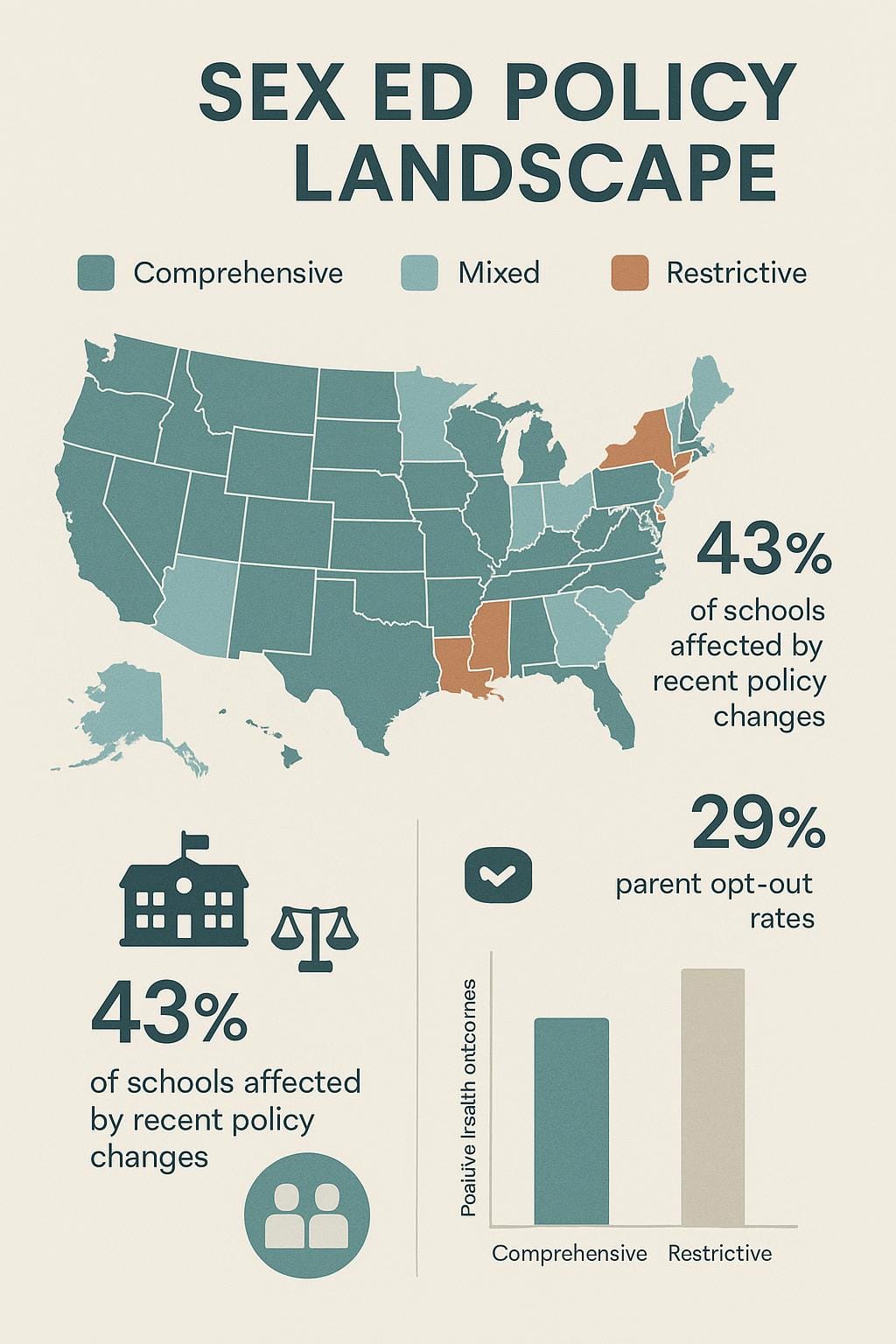
State-level policies show even more variation. California, Oregon, and Washington mandate comprehensive sex education that includes LGBTQ-inclusive content, while states like Texas, Mississippi, and Florida have adopted more restrictive approaches that limit discussion of certain topics.
The data reveals concerning trends: parent opt-out rates have doubled in some districts, and the quality of sex education a student receives now depends largely on geography. This creates significant disparities in access to critical health information.
Recent legislation examples highlight these divisions. Florida’s Parental Rights in Education law (often called “Don’t Say Gay” by critics) restricts discussion of sexual orientation and gender identity, while Illinois passed the Keeping Youth Safe and Healthy Act mandating age-appropriate, inclusive sex education.
Real Educators, Real Strategies: Effective Approaches
Teachers across the country have developed creative solutions to navigate policy restrictions while still meeting student needs. Their approaches offer valuable models for educators facing similar challenges.
Health educator Krystalyn Musselman developed a question box approach that allows students to anonymously submit questions about topics they might be uncomfortable discussing openly. She reviews questions privately, addressing them with medically accurate information while staying within policy parameters.
📦 Classroom Tools for Sensitive Discussions
- 🔗 Secure question submission box for student privacy
- 🔗 Discussion prompt cards that foster respectful dialogue
- 🔗 Visual aids that make complex concepts understandable
As an Amazon Associate, I earn from qualifying purchases.
Another educator, Laura, developed specific strategies for addressing discriminatory comments while maintaining an inclusive classroom. Her approach includes neutral, fact-based redirection: “In this classroom, we focus on medically accurate information. Let’s explore what the research tells us about this topic.”
These teacher-developed methods share common elements: they focus on medically accurate information, use neutral language, document everything, and create safe spaces for students to learn. Research indicates these approaches help maintain educational quality despite restrictions.

The Research Evidence: Why Comprehensive Approaches Matter
Studies consistently show that comprehensive sex education leads to better outcomes for students. Research has linked quality sex education in schools to delayed sexual initiation, increased contraceptive use, and reduced rates of unintended pregnancy and STIs.
Beyond physical health, studies document significant mental health benefits of inclusive education. LGBTQ students in schools with inclusive curricula report lower rates of depression, anxiety, and suicidal ideation compared to those in schools with restrictive or absent programs.
Related Guides: Check out our related articles for more helpful tips and insights.
This disconnect between research and policy creates ethical challenges for educators committed to student wellbeing. The evidence strongly supports comprehensive sex education approaches, yet many teachers must operate under policies that limit this evidence-based practice.
📚 Recommended Reading
- 📖 Evidence-Based Sex Education by Jennifer Driver – Perfect for understanding research foundations
- 📖 Teaching Health Education by Deborah Begoray – Practical strategies for diverse classrooms
As an Amazon Associate, I earn from qualifying purchases.
Moving Forward: Practical Guidance for Educators
To stay informed about policy changes affecting your classroom, I recommend these specific actions. First, sign up for updates from organizations like SIECUS (Sexuality Information and Education Council of the United States) and the Guttmacher Institute, which track policy developments at federal and state levels.
Second, develop clear communication frameworks for different stakeholders. Here’s an approach I’ve found effective for various groups:
- For administrators: Focus on alignment with educational standards and student health outcomes
- For parents: Emphasize transparency about curriculum content and the role of families in values discussions
- For community members: Share research on public health outcomes and community benefits
Third, document outcomes systematically. Keep records of student questions, misconceptions addressed, and anonymous feedback to demonstrate teaching effectiveness. This data becomes powerful when advocating for evidence-based approaches.
🛠️ My Complete Sex Education Policy Navigation Toolkit
Here’s everything I personally use and recommend:
Essential
Nice to Have
As an Amazon Associate, I earn from qualifying purchases.
Professional development is another critical component. Organizations like Advocates for Youth and Answer offer specialized training for educators navigating restrictive policies while maintaining teaching health education standards.
Many teachers have found that focusing on skill development rather than content can be an effective strategy. Teaching critical thinking, media literacy, and health advocacy skills can empower students even when specific content is restricted.
Conclusion: Finding Balance in a Polarized Landscape
Navigating sex education policy changes requires both principle and pragmatism. By staying informed, building supportive networks, and focusing on student needs, educators can find effective paths forward even in challenging policy environments.
Remember that you’re not alone in this journey. Connect with fellow educators facing similar challenges, share resources, and advocate collectively for LGBTQ education policies that support student health and wellbeing.
Sources
SIECUS: State Profiles on Sex Education Policy
Guttmacher Institute: Sex and HIV Education
Advocates for Youth: Policy Resources
CDC: School Health Policies and Practices Study