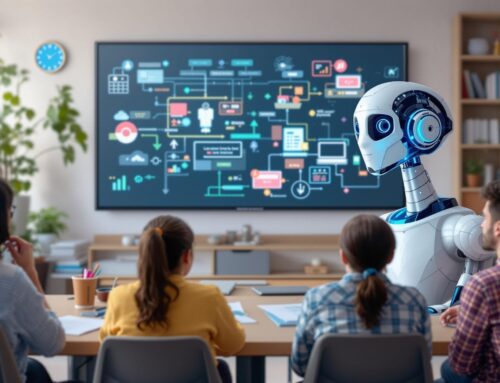
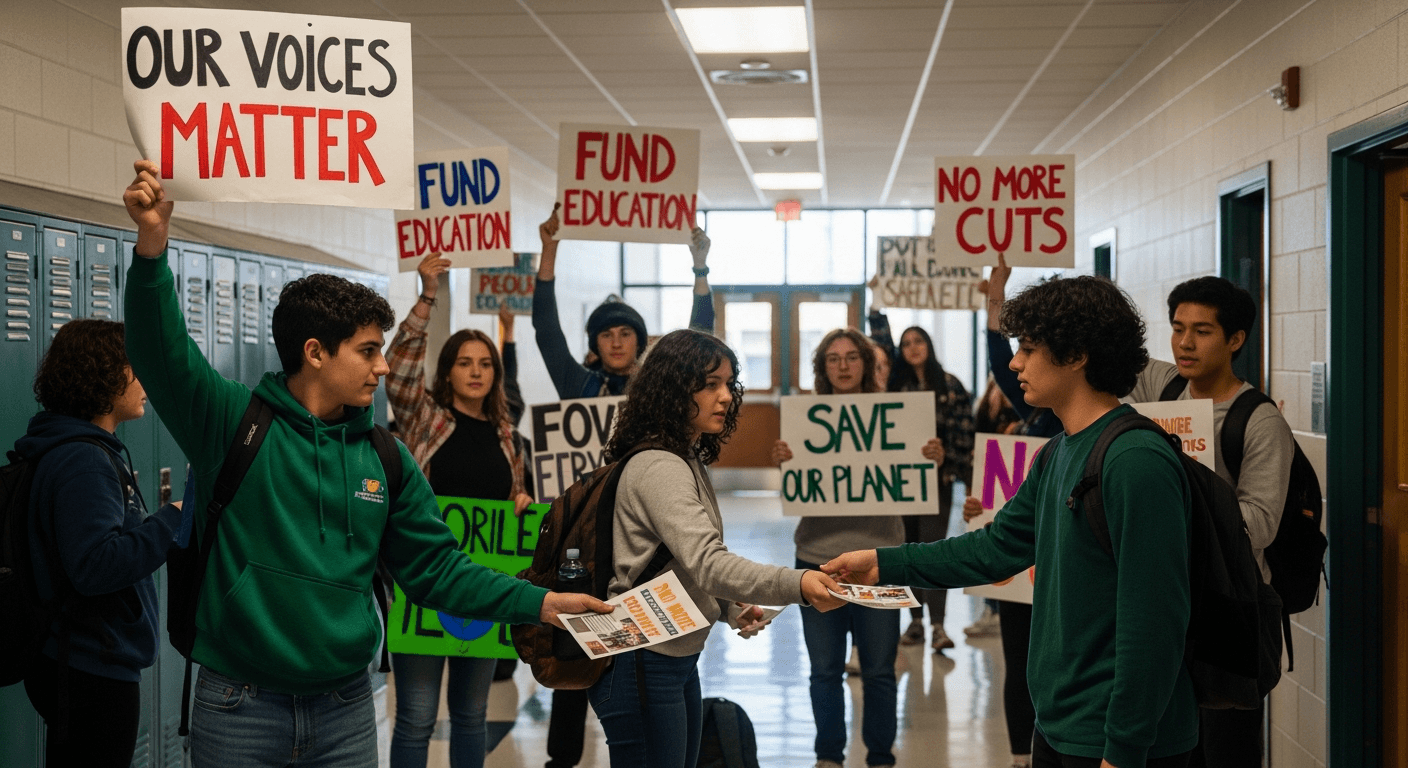
The rapid proliferation of artificial intelligence in everyday life has created a startling disconnect between how students use AI outside school walls and the guidelines (or lack thereof) within educational institutions. With 60% of U.S. schools operating without AI guidelines while students actively experiment with these powerful tools at home, we face an unprecedented education gap that widens each day technology advances without corresponding school policies.
Key Takeaways
- Urgent education gap exists as 60% of schools lack AI guidelines while students already use these tools extensively at home
- Four barriers block adoption: missing national standards, teacher preparation crisis, digital divide, and gender participation gaps
- Schools need a balanced framework that teaches both technical skills and ethical AI considerations
- Parents can drive change by asking specific questions about their school’s AI readiness
- Community-wide action is essential to prevent AI literacy from becoming another source of educational inequality
This post contains affiliate links. As an Amazon Associate, I earn from qualifying purchases at no extra cost to you. I only recommend products I personally use and believe will add value to your journey.
The AI Education Gap: A Looming Crisis for Today’s Students
We’re facing a critical moment in education where technology is outpacing pedagogy at an alarming rate. While students have embraced AI tools like ChatGPT for homework help, creative projects, and learning support, most schools remain stuck in reaction mode.
This isn’t just about staying current with technology trends. The gap between what students experience outside school and what they’re taught inside creates a dangerous disconnect in their digital literacy development.
📦 Essential AI Education Resources
- 🔗 Comprehensive guide for introducing AI concepts to students
- 🔗 Age-appropriate ethics workbook with classroom activities
- 🔗 Hands-on coding cards for algorithmic thinking
As an Amazon Associate, I earn from qualifying purchases.
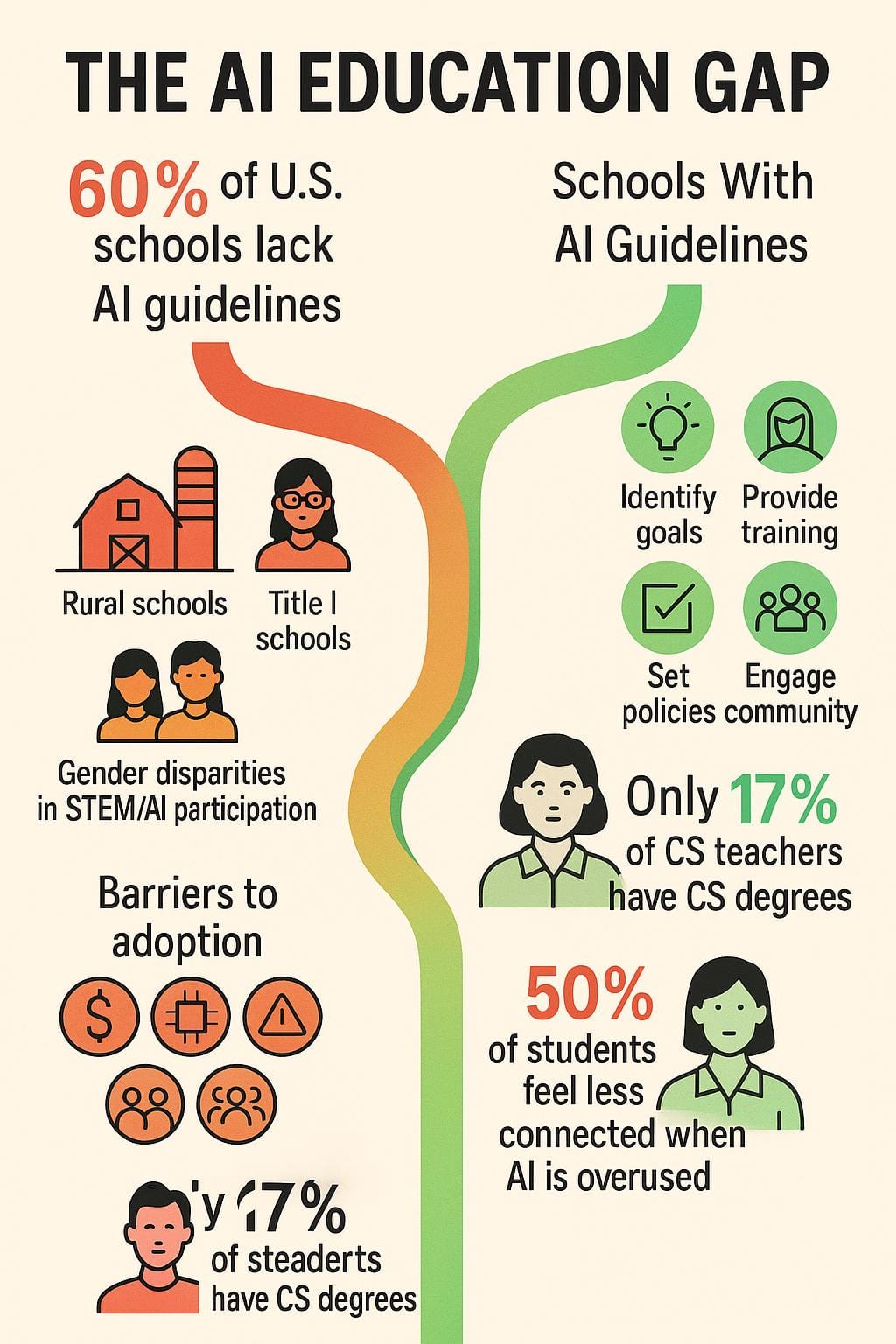
The statistics paint a concerning picture. With AI literacy quickly becoming a fundamental skill for future workforce success, the 60% of schools without guidelines are effectively leaving students unprepared for the economy they’ll enter.
Unlike previous technology transitions, AI isn’t just another tool—it represents a fundamental shift in how information is created, evaluated, and applied. Students need guidance on when AI helps learning and when it hinders it.
The Four Barriers Blocking School AI Adoption
The Milken Institute’s research has identified four major obstacles preventing schools from effectively incorporating AI education. These barriers create a perfect storm that leaves even well-intentioned educators struggling to move forward.
First, there’s a complete lack of national or state standards for AI education. Without clear guidance, schools are left to create policies from scratch, leading to inconsistent approaches and confusion.
Second, we face a severe teacher preparation crisis. Only 17% of computer science teachers have actual CS degrees, and even fewer have specific training in AI concepts or pedagogy. This expertise gap makes meaningful AI integration nearly impossible in many districts.
The digital divide represents the third barrier, with rural and Title 1 schools facing significantly greater obstacles to technology integration. Many schools still struggle with basic internet connectivity, let alone advanced AI tools.
Finally, there’s a growing gender gap concern, with data showing declining female participation in STEM fields and AI specifically. This disparity threatens to perpetuate existing biases in technology development and implementation.
Related Guides: Check out our related articles for more helpful tips and insights.
Together, these obstacles create a workforce preparation crisis of significant proportions. The economic implications are clear: students from schools without AI guidelines will enter a job market increasingly dependent on AI literacy, potentially locked out of the highest-growth sectors.
I’ve seen firsthand how schools with limited resources struggle to implement even basic technology policies. Without concerted effort, AI could become yet another vector for educational inequality.
A Framework for Developmentally Appropriate AI Education
Rather than viewing AI as either a miracle solution or an existential threat, schools need a nuanced, age-appropriate approach that evolves with students’ development. The four-point framework emerging from educational research provides a balanced roadmap for implementation.
For elementary students, the focus should be on understanding what AI is and isn’t through simple, concrete examples. Middle schoolers can explore how AI works and begin discussing ethical considerations. High school students should engage with both practical applications and deeper ethical implications.
📦 Teacher AI Training Resources
- 🔗 Step-by-step implementation guide for classroom teachers
- 🔗 Ready-to-use activities aligned with curriculum standards
- 🔗 Simple explanations of complex concepts for younger students
As an Amazon Associate, I earn from qualifying purchases.
Education researcher Emily Musil makes a compelling case against blanket bans on AI in schools. She argues that teaching ethical AI use prepares students far better than prohibition, which merely pushes usage underground where guidance is impossible.
However, balance remains crucial. Research finds that 50% of students feel less connected to teachers when AI is overused in educational settings. The human element of education cannot be sacrificed in pursuit of technological integration.

Schools successfully implementing thoughtful AI guidelines share common characteristics: they start with teacher training, involve students in policy development, and create clear boundaries between appropriate and inappropriate AI use. These schools view AI literacy as an extension of critical thinking rather than a separate technological skill.
The most effective frameworks address both technical skills and ethical considerations simultaneously. Students learn not just how to use AI tools but when they should use them and what implications their use has for learning authenticity and intellectual development.
Community Solutions: A Call to Collective Action
Parents don’t need to wait for top-down policy changes to address the AI education gap. The most immediate impact often comes from asking school leaders specific questions about their AI readiness and guidelines.
Here are key questions parents should be asking their children’s schools:
- What is the school’s policy on student AI use for assignments?
- How are teachers being trained to understand and teach with AI?
- Is the school incorporating AI literacy into its curriculum?
- How is the school addressing equity issues in AI access and education?
- What resources are available for parents to support AI literacy at home?
| AI Learning Tool | Best For | Key Feature | Price Range | Shop Now |
|---|---|---|---|---|
| Osmo Coding Starter Kit | Elementary | Hands-on algorithmic thinking | $$ | View Deal |
| Evo Robot by Ozobot | Middle School | Programming with color codes | $$ | View Deal |
| Arduino Starter Kit | High School | Advanced programming projects | $$$ | View Deal |
As an Amazon Associate, I earn from qualifying purchases.
For teachers, the path forward begins with personal AI literacy. Even without formal training programs, educators can start exploring AI tools themselves, joining online communities, and gradually incorporating simple AI concepts into existing lessons.
I’ve found that introducing basic AI tools that save time on administrative tasks gives teachers the bandwidth to learn more advanced applications. Starting small builds confidence before tackling larger curricular changes.
📦 Student AI Learning Essentials
- 🔗 Hands-on robotics kit with coding challenges
- 🔗 Kid-friendly introduction to machine learning concepts
- 🔗 Critical thinking workbook for ethical technology use
As an Amazon Associate, I earn from qualifying purchases.
The role of employers and philanthropists cannot be overlooked. Business leaders who need AI-literate workers tomorrow must invest in school partnerships today. This isn’t charity—it’s workforce development with direct business implications.
The economic mobility implications of AI literacy are profound. As AI continues reshaping industries, students without these skills face restricted career options. Addressing the AI education gap is fundamentally about preventing technology from becoming another vector for inequality.
🛠️ My Complete AI Education Toolkit
Here’s everything I personally use and recommend:
Nice to Have
As an Amazon Associate, I earn from qualifying purchases.
The good news is that the AI education gap is addressable through community effort. Unlike some educational challenges that require massive system overhauls, meaningful progress can begin with individual schools, teachers, and parents taking initiative.
The time to act is now. Each day without thoughtful AI guidelines in schools widens the gap between what students need and what education provides. Our collective action—or inaction—will determine whether artificial intelligence education becomes a force for opportunity or another source of educational inequality.
Related Guides: Check out our related articles for more helpful tips and insights.
Sources